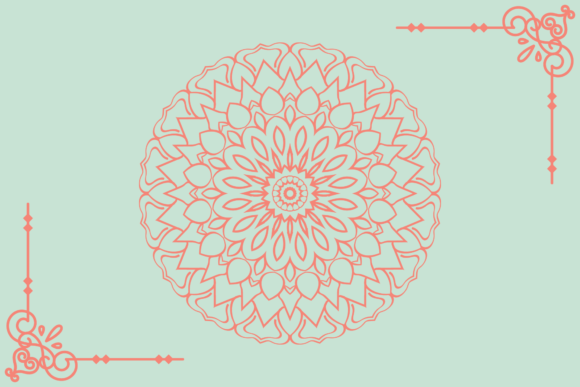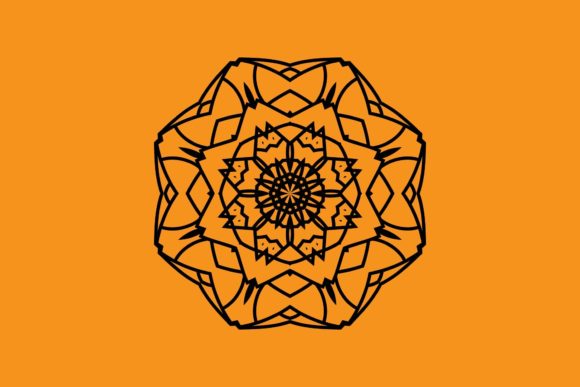
Mandala Floral Asian Illustration
First Impressions: Delicate, Balanced, and Quietly Confident
When I opened Mandala Floral Asian Illustration, what struck me wasn’t just the symmetry—it was the breathing room. This isn’t a tightly packed, high-contrast vector meant for screen printing or bold t-shirt graphics. It’s a layered, organic mandala built from stylized chrysanthemums, plum blossoms, and subtle lotus motifs—arranged with clear Asian design sensibility but without literal iconography. The linework is clean, the negative space intentional, and the overall scale feels generous without being overwhelming. For embroidery, that balance matters more than most designers admit. Too much detail becomes muddy in satin stitch; too little reads as generic. Mandala Floral Asian Illustration lands right in the sweet spot: intricate enough to feel special, open enough to translate cleanly into thread.
A Real Project Test: Embroidering a Linen Kitchen Towel
Last week, I used Mandala Floral Asian Illustration on a 16” x 24” natural linen tea towel—intended for a small-batch holiday gift set sold through my Etsy shop. I resized the vector to fit a 4.5” hoop, digitized it with moderate fill stitch density (no dense underlay), and ran it on medium-weight cutaway stabilizer. The result? Crisp outer petals, soft gradients in the inner mandala rings, and zero puckering—even on the slightly nubby linen surface. Customers commented on how “calm” and “thoughtful” the finished product felt—not flashy, but quietly intentional. That’s the mood this design carries into real-world use: serene, handmade, culturally grounded without leaning on cliché.
Where It Shines—and Where It Asks for Care
Mandala Floral Asian Illustration works beautifully for:
- Custom apparel: Sweatshirts, lightweight jackets, and cotton tote bags—especially when placed center-chest or back-panel for visual weight.
- Baby and nursery items: Embroidered pillow covers, muslin swaddles, and organic cotton bibs—its gentle rhythm feels nurturing, not fussy.
- Small-batch boutique merchandise: Aprons, ceramic mug sleeves, and folded greeting cards with embroidered accents—all benefit from its refined, non-trendy presence.
- Holiday and wedding gifts: Think monogrammed hand towels, heirloom-style sachets, or framed embroidery samplers—this design reads as keepsake-worthy.
But here’s where attention matters:
- Avoid tight curves and stretchy fabric—like caps or ribbed knit cuffs. The outer floral loops lose definition when pulled across convex surfaces.
- Test carefully on dark or textured fabrics. Fine inner lines may vanish on charcoal fleece or heavy terry cloth unless you adjust stitch density or add a light underlay.
- Don’t shrink it below 3.25” for machine embroidery. Tiny filigree elements compress poorly in fill stitch and risk thread breakage or skipped stitches.
- Resist layering it over busy prints. This design earns its impact through clarity—not contrast. Pair it with solid, muted backgrounds for maximum elegance.
What It Does for Your Craft Business
As an Etsy seller and embroidery educator, I watch how design choices shape buyer trust—and Mandala Floral Asian Illustration builds credibility fast. It doesn’t scream “trend.” It whispers “carefully made.” That translates directly to perceived value: customers pay more for pieces that feel intentional, not algorithmically generated. When I listed embroidered linen napkins using this motif, buyers specifically mentioned “the quiet sophistication” in their reviews—proof that mood transfers from vector to finished product.
For craft fairs or local boutiques, it supports brand consistency without locking you into one style. You can pair it with minimalist typography for modern branding—or offset it with hand-dyed fabric for boho warmth. And because it’s delivered as editable vector files, you’re not stuck with a rigid layout. Need to rotate one petal for better hoop alignment? Adjust spacing for a curved apron pocket? Scale only the central motif for a baby onesie? All possible—without pixelation or distortion.
Practical Notes Every Embroidery Designer Should Run Through
Before stitching your first Mandala Floral Asian Illustration project:
- Always test on scrap fabric—especially if you’re using it on linen, rayon blends, or lightweight knits. Thread tension shifts dramatically across fiber types.
- Check thread color contrast early. Soft peach or sage greens read beautifully on ivory linen—but disappear on oatmeal canvas. Try black-and-white mockups before committing.
- Review stitch density. Vectors don’t auto-digitize. If you’re outsourcing digitizing, flag areas like inner mandala rings—they need lighter fill than outer petals to avoid stiffness.
- Confirm hoop size compatibility. While the vector resizes freely, your machine’s physical hoop limits what fits cleanly. Measure before digitizing.
- Inspect fine corners and junctions. Some vectors render hairline gaps at intersections—those become visible holes in satin stitch. Zoom in and close paths if needed.
- Verify licensing. Since Mandala Floral Asian Illustration is marketed for logos, illustrations, and t-shirt designs, confirm whether commercial embroidery rights are included—especially if you plan to sell finished embroidered goods or digital embroidery files.
Final Thought: A Design That Supports, Not Dominates
This isn’t a “wow” design—it’s a “yes” design. It doesn’t demand attention; it earns it. Whether you’re embroidering a personalized gift for a new parent, building a cohesive line of kitchen textiles, or creating signature patches for your small shop, Mandala Floral Asian Illustration serves the maker—not the algorithm. It leaves room for your voice, your fabric choices, your thread palette. In a market flooded with overdesigned, oversaturated graphics, that restraint is rare. And valuable. Treat it with intention, test thoughtfully, and let its quiet harmony do the work.